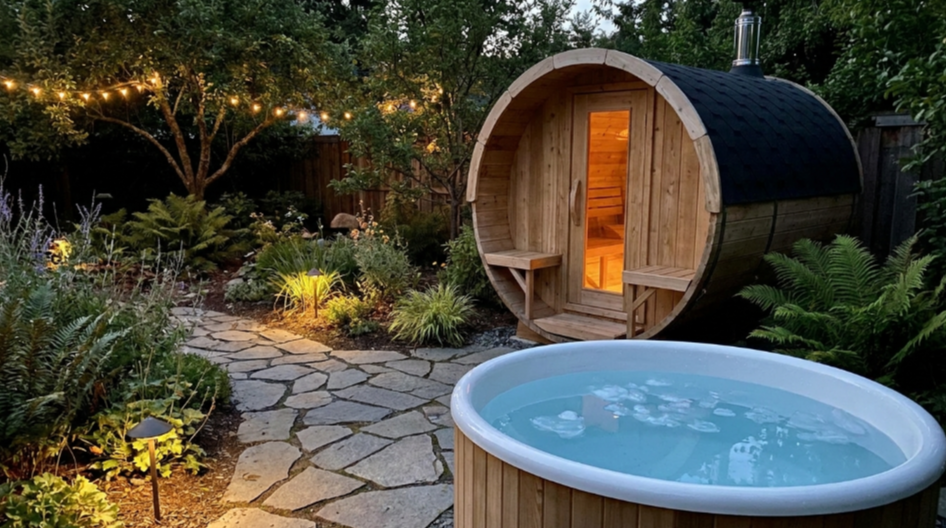
For a couple planning to use a sauna every day, the setup that works best is a two to three-person cabin with a heater sized for quick warm-up, a two-tier bench so you’re not always shoulder to shoulder, and either infrared or a modestly sized traditional electric heater rather than a large one built for entertaining. Daily use rewards a setup that’s fast, comfortable, and cheap enough per session that you never think twice about using it. Here’s what that actually looks like, piece by piece.
1. A Two to Three-Person Footprint, Not Bigger
It’s tempting to size up for guests, but a larger cabin takes longer to heat and costs more per session, both of which quietly discourage daily use over time. A cabin sized for two to three people, roughly 4 by 5 feet to 5 by 6 feet of interior floor space, heats faster and keeps running costs low enough that daily use doesn’t feel like a splurge. If you occasionally host more people, a slightly larger three-person unit still works fine for two on a normal day without the oversized cost and heat-up time of a four or five-person cabin built primarily for occasional group use.
2. A Heater Built for Frequent Cycling, Not Occasional Use
Heaters used once a week and heaters used every day age differently. Daily cycling puts real hours on a heating element, and a budget heater that would be fine for weekend use can wear out faster under a daily schedule. Look specifically for heaters marketed or rated for frequent or commercial-adjacent use rather than the cheapest residential option, even if it costs a bit more upfront. For a two-person daily setup, that typically means an infrared unit in the 1.5 to 2 kW range or a compact electric traditional heater around 4.5 to 6 kW, both of which are sized appropriately for a smaller cabin without being underpowered.
3. A Two-Tier Bench Layout
Heat stratifies inside a sauna, meaning the upper bench runs noticeably hotter than the lower one, often by 20 degrees or more. A two-tier layout lets each person pick their preferred intensity without adjusting the thermostat, which matters more than it sounds like for two people who might not want the exact same heat level every single day. Aim for at least 4 feet of width across the benches so there’s real personal space, with the upper tier set 12 to 18 inches above the lower.
4. Infrared for Lower Daily Running Cost, or a Modest Traditional Heater for the Steam Ritual
Daily use is where the electric bill actually adds up, so running cost matters more here than it would for an occasional-use cabin. An infrared setup typically costs 15 to 30 cents per session, which over a year of daily use is a manageable, predictable expense. A modest traditional electric heater costs more per session, often 50 cents to a dollar, but gives you the steam and higher heat that some people find essential to the ritual. Neither is wrong for daily use; it’s a real tradeoff between cost and the specific experience you’re after.
5. A Simple, Consistent Pre-Sauna Routine
Setups that get used daily tend to share one thing: a routine simple enough that skipping it feels like more effort than doing it. That might mean a towel hook right by the door, water bottles that live in the cabin area permanently, or a timer app you both already have set. The physical sauna matters less here than the friction around using it, and a lot of couples who stop using an expensive setup after a few months didn’t buy the wrong sauna, they just never built the five-minute habit around it.
6. Placement Close Enough to Your House That Weather Doesn’t Become an Excuse
A sauna 15 steps from the back door gets used far more consistently than one at the far end of a large yard, especially in daily-use households where a two-minute walk in the rain or cold is exactly the kind of small friction that erodes a habit within a month. If you have any flexibility in placement, favor proximity over privacy or view. You can add a short covered walkway or a simple gravel path for a fraction of what it costs to fix a habit that quietly stopped a season ago.
7. A Basic Hygrometer and Timer, Nothing Fancier
Daily users benefit more from consistency than from features. A simple thermometer and hygrometer, often included with the cabin or added for under $30, lets both people dial in a temperature and humidity combination that works for them and repeat it every day without guessing. A built-in or plug-in timer that shuts the heater off automatically after a set session length is worth having too, both for safety and so a session doesn’t quietly run long on a night one of you is tired and loses track of time.
8. Buying From a Retailer That Lists Real Specs, Not Just Lifestyle Photos
When you’re comparing two-person cabins specifically for daily use, the numbers that matter are heater wattage, interior square footage, bench dimensions, and warranty length on the heating element, not the lifestyle photography most listings lead with. SweatDecks.com lists these specs directly on individual product pages, which makes it easier to compare a $2,800 two-person infrared cabin against a $4,200 traditional model on the actual numbers that determine whether it holds up under daily use, rather than guessing from marketing copy.
Frequently Asked Questions
What size sauna is right for two people using it daily?
A two to three-person cabin, roughly 4 by 5 feet to 5 by 6 feet, is the sweet spot. Large enough to not feel cramped, small enough to heat quickly and cheaply for daily use.
Does daily sauna use wear out the heater faster?
Yes, somewhat. Daily use adds more cumulative hours than occasional use, which can shorten a heating element’s lifespan. A heater rated for frequent use pays off for daily households.
Is infrared or traditional better for two people using it every day?
Both work. Traditional matches more of the cardiovascular research, while infrared’s lower running cost and faster heat-up make daily use easier to stick with.
How much space do two benches need in a small sauna?
At least 4 feet of width to avoid feeling cramped, with the upper bench set 12 to 18 inches above the lower one.
References
- “Cardiovascular and Other Health Benefits of Sauna Bathing: A Review of the Evidence.” Mayo Clinic Proceedings, 2018. https://pubmed.ncbi.nlm.nih.gov/30077204/
- “Benefits and risks of sauna bathing.” The American Journal of Medicine, 2001. https://pubmed.ncbi.nlm.nih.gov/11165553/
- “Does the Combination of Finnish Sauna Bathing and Other Lifestyle Factors Confer Additional Health Benefits? A Review of the Evidence.” Mayo Clinic Proceedings, 2023. https://pubmed.ncbi.nlm.nih.gov/37270272/