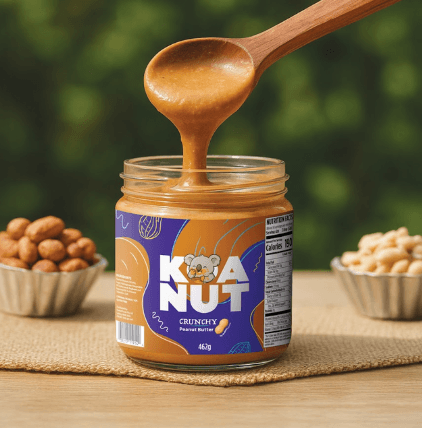
There comes a point where the labels that got you started begin working against you. Custom sticker labels printed at home looked charming on a trestle table at the local market, and customers liked them because the roughness was part of the story. Then a buyer asks for a meeting. Suddenly those same labels sit under fluorescent lighting next to brands with proper print budgets, and the charm reads as amateur instead. The gap between market stall presentation and retail shelf presentation is wider than most small producers expect.
Getting custom sticker labels ready for retail is not really about spending more. It is about meeting requirements that a market stall never enforces. Let us break it down.
Why Market Stall Labels Fail on a Retail Shelf
At a market, you are standing right there. You explain the product, answer questions, hand over samples. The label barely has to work.
On a shelf, nobody is standing there.
Retail punishes labels in ways a market stall never does. Products get handled and put back. Chilled display cases create condensation. Stock rotation means bottles slide against each other for weeks. Overhead lighting exposes every registration error.
And competitors sit within arm’s reach, offering an instant comparison you never had to face at your own stall.
A label that peels at the corner after a fortnight in a chiller is not a small problem. Retail staff pull those products.
Retail Compliance Requirements Small Brands Miss
This is where it gets expensive if you leave it late.
Australian labelling rules apply the moment your product sits in a retail environment. Under the Australia New Zealand Food Standards Code, packaged goods for retail sale generally need the name of the product, lot identification, supplier name and business address, an ingredient list, allergen declarations, a date mark, and nutrition information.
Allergen rules changed materially. Plain English Allergen Labelling became mandatory from February 2024, which means specific required terms in bold within the ingredient list, plus a separate summary statement. Vague wording no longer passes.
Then there is the barcode. Most retailers want a GS1 barcode with a quiet zone around it and enough contrast to scan first time. Scanning failures at the checkout create real friction, and buyers remember them.
None of this fits neatly onto the label you designed for a stall. That is the actual problem. You are not reprinting the same artwork at better quality; you are redesigning around a longer list of mandatory content.
Water Resistant Label Materials for Retail Conditions
Home printer paper will not survive retail. What you need depends on where the product ends up.
Beverage producers face the hardest version of this. A Sydney gin distillery bottling for retail deals with chilled storage, condensation forming on glass, and constant handling. Paper goes soft and lifts. Synthetic facestock, usually polypropylene, holds through it. Water-resistant labelling suits indoor and semi-exposed conditions like this, though it is not built for products that live permanently outdoors.
Cosmetics and skincare sit in the same category. Bathroom shelves are damp, jars get opened with wet hands, and a paper label starts looking sad within a month.
Dry shelf-stable goods are different. Quality paper stock often works fine there, and it suits some brand aesthetics better than synthetic anyway.
The adhesive deserves as much attention as the face material. A permanent adhesive on glass behaves differently from the same adhesive on textured plastic. That may sound fussy, but the alternative is finding out after a thousand units are labelled.
Print Quality Standards Retail Buyers Notice
Buyers rarely say your print quality is poor. They say the product is not quite right for them, and you never learn why.
What gets noticed: colour drift between runs, so your product looks inconsistent on shelf. Fuzzy small text, particularly in the ingredient list. Visible pixelation from low-resolution artwork. Trapped air bubbles from hand application.
Supply artwork as vector where you can, keep images at 300 dpi minimum, and specify colours rather than guessing at them.
Consistency matters more than people think. A brand that looks slightly different across three production runs signals instability to a buyer deciding whether to stock you for a year.
See also: How to Evaluate a GLP-1 Telehealth Provider in 2026
What Separates the Brands That Make the Jump
Before your first serious buyer conversation, check your current label against the full Food Standards Code requirements for your category. Get a GS1 barcode and confirm it scans. Choose material based on the storage conditions your product will actually face.
Then order a sample run, apply it to real containers, and leave them somewhere cold and damp for a fortnight. That single step catches more problems than anything else, and it costs almost nothing.
The producers who make this transition well treat labelling as part of getting retail ready, sitting alongside insurance and food safety plans. The ones who struggle treat it as a print job to sort out later.